

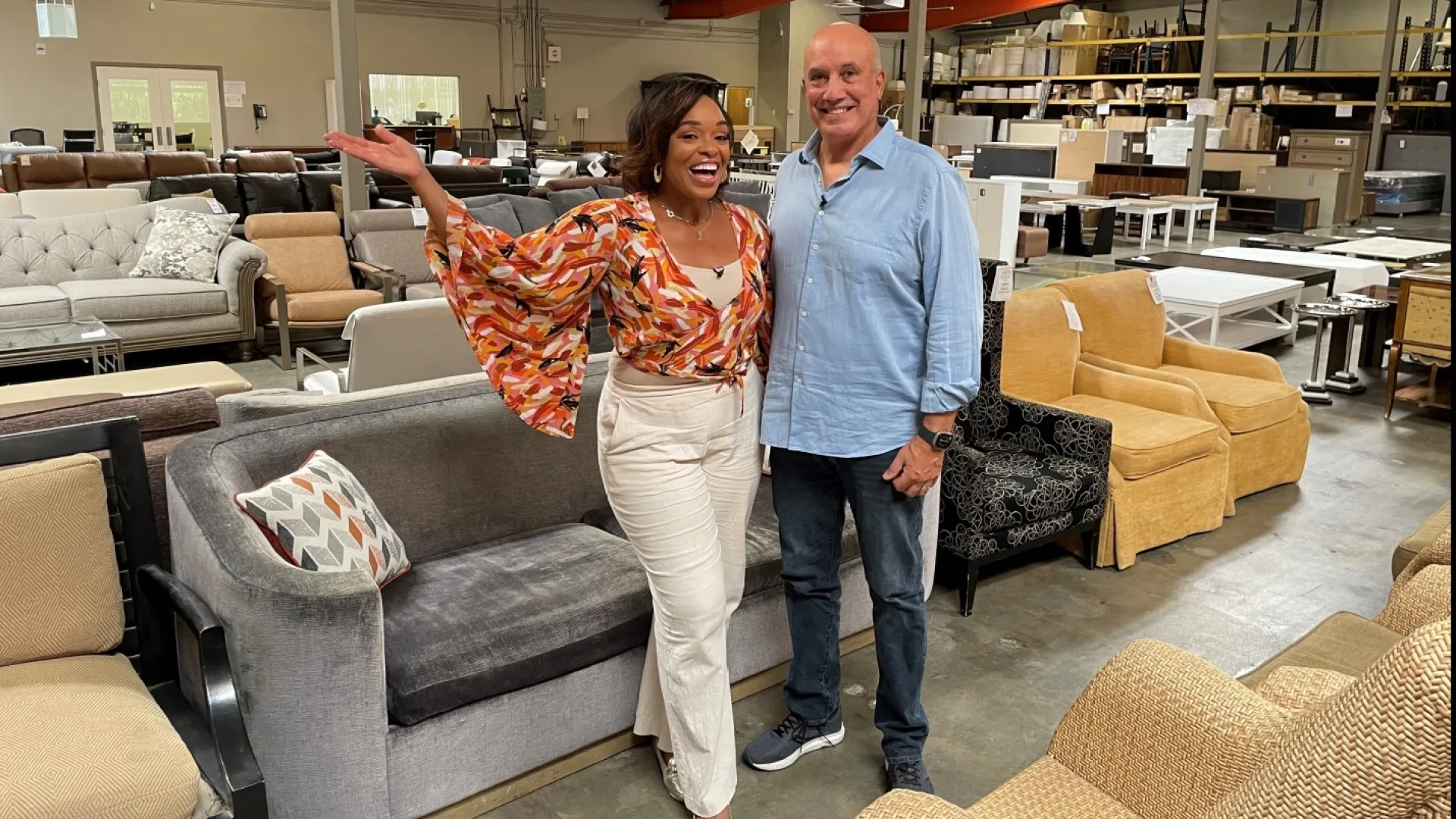
You’ve seen the giant yellow banners draped over the storefronts near the Layton Hills Mall. “50% OFF!” “Blowout Liquidation!” “Tax-Free Weekend!” It’s enough to make anyone grab their truck keys and head for the Hill Field Road exit. But if you’ve ever walked into a showroom and realized that the “half-off” sofa still costs $1,800, you start to wonder if the math is actually math-ing.
In a retail-heavy hub like Layton, furniture stores are playing a high-stakes game of psychological chess. The discounts aren’t just random acts of kindness; they are carefully structured financial maneuvers designed to move inventory without killing the store’s bottom line. Understanding how these price drops are actually built behind the scenes can save you more money than any “limited-time” coupon ever will.
The “MSRP” Myth and the Anchoring Effect
The first thing you have to understand is that the “Original Price” you see on a tag is often a ghost. In the industry, we call this “anchoring.” A store sets a high Manufacturer’s Suggested Retail Price (MSRP) that they never actually intended to charge.
Why the High Anchor Works
When you see a dining table marked down from $3,000 to $1,500, your brain instantly registers a $1,500 “win.” You stop evaluating the table based on its actual value and start evaluating it based on the size of the discount. In reality, that table was likely designed to sell for $1,400 all along. The “discount” is simply a way to make you feel like you’ve negotiated a massive victory before you even talk to a salesperson.
The “Evergreen” Sale
Have you noticed that some stores in Davis County seem to be having a “Going Out of Business” or “Final Clearance” sale for three years straight? This is a specific pricing strategy. By keeping the store in a constant state of “emergency” discounting, they create a sense of urgency. If you think the deal expires Sunday, you’re less likely to drive down to Salt Lake to compare prices.
The Seasonal Cycle of the Showroom Floor
Furniture isn’t like groceries; it doesn’t rot, but it does go out of style. New designs typically hit the market in the spring and the fall. This creates a very predictable rhythm for when the real discounts happen in Layton.
The February and August Sweet Spots
Most new furniture styles are debuted at trade shows in January and July. To make room for the new “vibe” coming in, stores have to clear out the old stuff. If you shop in February or August, you aren’t just getting a promotional discount—you’re helping the store solve a space problem. This is when you can find legitimate price cuts on floor models that have been sat on by a few dozen people but are otherwise perfect.
Holiday “Door-Busters”
Events like Labor Day or the 4th of July are huge for retailers like RC Willey. Behind the scenes, these stores negotiate “volume buys” with manufacturers specifically for these holidays. They might buy 500 identical gray recliners at a steep discount just to feature them as a $299 door-buster. These are real deals, but they are often “limited-spec” items, meaning you can’t change the fabric or the color without the price jumping back up to the normal rate.
Financing: The Hidden Discount (or Cost)
In Northern Utah, we love a good “No Interest for 24 Months” deal. This is often marketed as a discount, but it’s actually a financial product.
- The Store’s Cost: The store has to pay a fee to the bank to offer you that 0% interest. That fee can be as high as 10% of the purchase price.
- The Negotiation Gap: If a store is willing to give you two years of interest-free payments, they are essentially “eating” that 10% cost.
- The Cash Leverage: This is where the real secret lies. If you aren’t using the financing, you should ask for a “cash discount.” Tell the salesperson, “I know the bank charges you a fee for that 0% financing. Since I’m paying cash and you don’t have to pay the bank, can we take that 10% off the price instead?” More often than not, they’ll say yes.
The Relatable “Free Shipping” Illusion
We’ve all been there: you find a desk for $400 at a furniture store in Layton and feel great about it until you get to the checkout counter and see a $150 “delivery and setup” fee. Suddenly, that 20% discount you fought for is completely gone.
I once worked with a homeowner near Kaysville who spent three hours haggling over a sectional. He got the price down by $200, feeling like a master negotiator. But because he didn’t ask about the delivery fee until the very end, the store just added a “long-distance fuel surcharge” and a “staircase fee” that totaled $225. He actually ended up paying more than if he had just accepted the original price with “Free Local Delivery.”
Pro Tip: Always negotiate the “out-the-door” price, not the “item” price. The store can move numbers between the “furniture” column and the “labor” column all day long to make you feel like you’re getting a deal.
The Manager’s “Markdown” Power
Salespeople usually have a small “wiggle room” percentage—typically 5% to 10%—they can use to close a deal without asking anyone. But the Floor Manager has much more power.
Clearance and “As-Is” Sections
Most Layton showrooms have a back corner or a basement area for “as-is” items. These are often returns or floor models with a tiny scratch on the back leg. Managers are authorized to move this inventory at almost any cost just to get it out of the building. If you find a piece you like in the main showroom, ask if there is an “as-is” version in the back. You can often get a 40% discount for a scratch that no one will ever see once the sofa is against your wall.
The Bundle Play
The best way to get a real, “behind-the-scenes” discount is the bundle. Stores make a much higher profit margin on accessories (lamps, rugs, pillows) than they do on the big-ticket sofas. If you’re buying a whole living room set, ask them to “throw in” the rug or the end tables for free. The store is more likely to give away a $200 rug than they are to take $200 off the sofa, even though it costs you the same either way.
How to Win the Pricing Game
The “secret” to furniture discounts isn’t a secret code or a special coupon. it’s timing and transparency. If you walk in knowing that the MSRP is a suggestion, that financing has a hidden cost, and that February is better than December, you’re already ahead of 90% of other shoppers.
Don’t get distracted by the neon signs. Focus on the material of the furniture and the total cost of getting it into your house. If a deal feels too good to be true, it’s probably because the “original price” was inflated to begin with.
